A garage door rarely goes back to work unchanged after a part is replaced. The new component may solve the original fault, but it can also reveal a second problem that was masked by the first one. That is why alignment checks matter so much after repair work. A door can open and close, yet still run out of square, drag on one side, hesitate near the floor, or refuse to seal properly. Those issues often show up after replacing parts such as springs, motors, or hardware tied to the opener system.
In day to day service work, the pattern is familiar. A customer books a visit because the garage door is not closing properly. The immediate fault may be a worn motor, a failed spring, or another component that has simply reached the end of its life. Once that part is replaced, the door starts moving again, but the next job is making sure it moves straight, evenly, and without strain. A garage door that is technically functional but misaligned will usually become a repeat repair.
This is especially relevant in places where conditions are hard on hardware. In coastal areas such as the Gold Coast, salt air, humidity, and heat can accelerate wear and increase maintenance needs. A door that was close to acceptable before the repair can drift further out after replacement work if the system is not checked carefully. That does not mean every job becomes a major reset. It does mean the alignment check should be treated as part of the repair, not as an optional extra.
Why replacement changes the way a door sits and moves
Garage doors work as systems. When one part changes, the load and movement pattern across the rest of the door can change too. A new motor may pull more consistently than the old one. A fresh spring may restore lifting force that had slowly faded over time. If both springs are not matched, balance problems can follow, which is one reason professional guidance often points toward replacing both when one breaks. Springs tend to wear at a similar rate, and mixing old and new can create uneven behaviour.
That uneven behaviour often shows up as alignment trouble before it appears as a complete failure. One side may seem to lead the other. The bottom edge may not meet the floor evenly. The door may appear to twist slightly during travel, even if it still gets from fully open to fully closed. In some cases the customer notices noise first. In others, they notice a gap, a shudder, or an opener that sounds like it is working harder than it should.
The same principle applies after garage door opener repair or motor replacement. When automation is upgraded on an existing door, the new drive unit can expose issues that the old, weaker motor was no longer forcing through the same way. The new setup may be doing its job correctly, while the door itself is the part that is no longer tracking or balancing as it should.
What alignment really means in practice
Alignment is not a single measurement. It is the relationship between the door, its movement path, and the components controlling that movement. A well aligned garage door travels smoothly, sits evenly when closed, and does not place obvious side load on its own hardware. It should not need to fight its way through the opening cycle.
On service calls, alignment checks usually begin with the simplest question: does the door look square and consistent through its full movement? That sounds basic, but it reveals a lot. If the top line of the door shifts as it travels, if one side lags, or if the bottom seal contacts the floor unevenly, the technician already has useful information. The eye catches asymmetry faster than most people expect.
The next practical point is whether the replaced component changed the force balance of the system. A spring replacement can do that directly. A motor replacement can expose it indirectly. If the door was being helped by an opener that had gradually compensated for a sagging setup, fresh components may stop hiding the problem. That is why a customer sometimes says, “It wasn’t doing this before the repair,” when the repair is not the cause so much as the moment the real condition became visible.
The checks that matter most after parts are changed
A proper post repair review does not need to be theatrical, but it should be deliberate. The goal is to confirm that the door is not merely moving, but moving correctly. The most useful checks are straightforward and observable.
- Watch the door through a full open and close cycle, looking for any tilt, twist, drag, or uneven contact at the floor. Listen for changes in sound, especially if the door grows louder at one point of travel or one side seems to work harder. Check whether the replacement part has altered the door’s balance or revealed a mismatch elsewhere in the system. Confirm that the opener and door are working together, not against each other. Reassess the full setup after a short period of use if the door had significant wear before the repair.
Those points sound simple because they are simple. The value comes from interpretation. A brief scrape near the floor is different from a full side bind. A slight shift in how the bottom edge meets the slab may be a sign of system wear, or it may point to balance changes after spring work. Good alignment checking is less about one dramatic test and more about reading several small clues together.
After spring replacement, balance is the first question
Spring work deserves special treatment because the risk is high and the effect on alignment is immediate. Springs are under high tension and are dangerous to adjust or repair without the right training and tools. That safety point should never be softened. If spring replacement has been done, especially after a break, the alignment check needs to look closely at how the door now carries its weight.
One practical issue is whether both springs were addressed. Safety guidance and service experience both support the idea that when one spring breaks, the other is often close behind. They usually wear similarly, and mismatched springs can create balance problems. That does not automatically mean every pair is identical in every real world situation, but it does explain why paired replacement is often recommended. A door running on uneven spring force may still move, but alignment and long term wear become concerns almost immediately.
If the door closes with one side settling first, if the travel looks slightly skewed, or if the opener appears to be correcting movement rather than simply guiding it, those are signs worth taking seriously. They do not always point to the springs alone, but after spring replacement they belong near the top of the checklist. A balanced door is easier to align. An unbalanced one tends to fight every other adjustment.
After motor or opener work, look at the door, not just the operator
A lot of customers focus on the opener because it is the part they interact with every day. The remote stops responding, the motor hums, or the door stalls and the first thought is garage door opener repair. That is understandable. Opener and motor replacement are standard services, and automation upgrades for existing garage doors are widely offered. But replacing the operator is only half the story if the door itself is out of line.
A new motor can make a tired door seem better for a while, but it can also make existing alignment issues easier to spot. The operator should not be asked to straighten a crooked path or overcome resistance caused by poor tracking. If that is happening, the opener becomes the visible victim of a door issue rather than the true source of the fault.
This is one reason a repeated complaint like “my garage door is not closing properly” needs a broader look. The closing problem may not be an electronic failure. It may be the result of a door that no longer approaches the floor evenly after component replacement. A fresh opener may stop when it meets inconsistent resistance, or it may complete the cycle while leaving the bottom edge visibly uneven. In both cases, the repair is incomplete until alignment is checked and corrected where needed.
What homeowners often notice first
Most owners do not describe garage door alignment in technical language. They talk about symptoms. The remote works, but the door sounds rough. The bottom corner leaves a small gap. The panel line looks slanted when the door is halfway down. The motor was replaced, but the door still does not seem right.
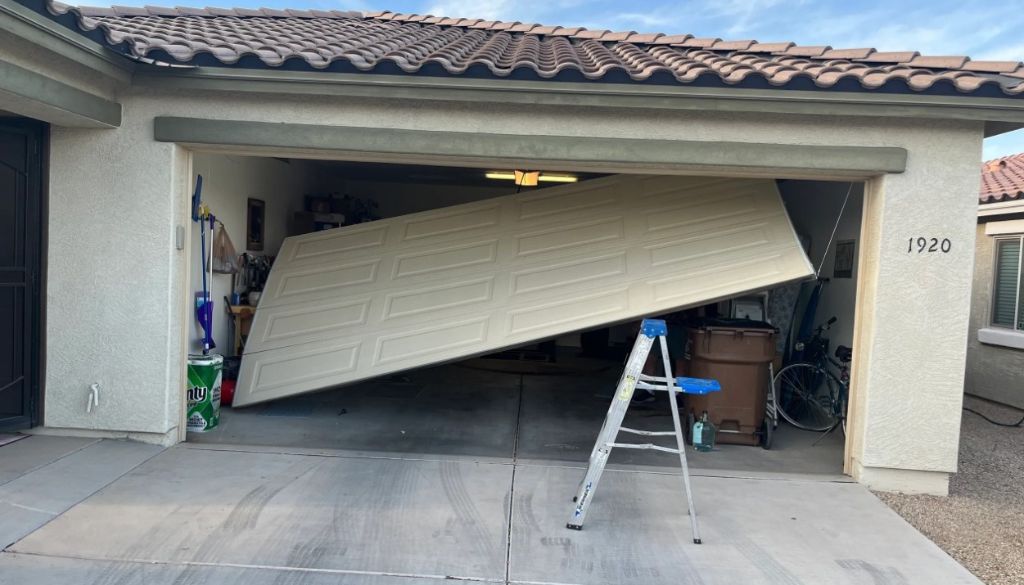
Those observations are useful. They often tell you where to look before you touch a tool. A gap at the floor after spring replacement may suggest that the load is not being shared evenly. A door that becomes noisier after a motor upgrade may be revealing wear or resistance that the old operator handled differently. A slight lean during travel can indicate that the system needs more than the original component swap.
From a service standpoint, these are not cosmetic complaints. Misalignment usually increases wear somewhere. Even a small issue can shorten the working life of a new part by forcing it to compensate for the rest of the system. That matters with motors and springs because those are among the more consequential replacements a customer pays for. No one wants to invest in a repair only to have the new component strained by an old alignment problem that was left in place.
Conditions on the Gold Coast make follow up checks more important
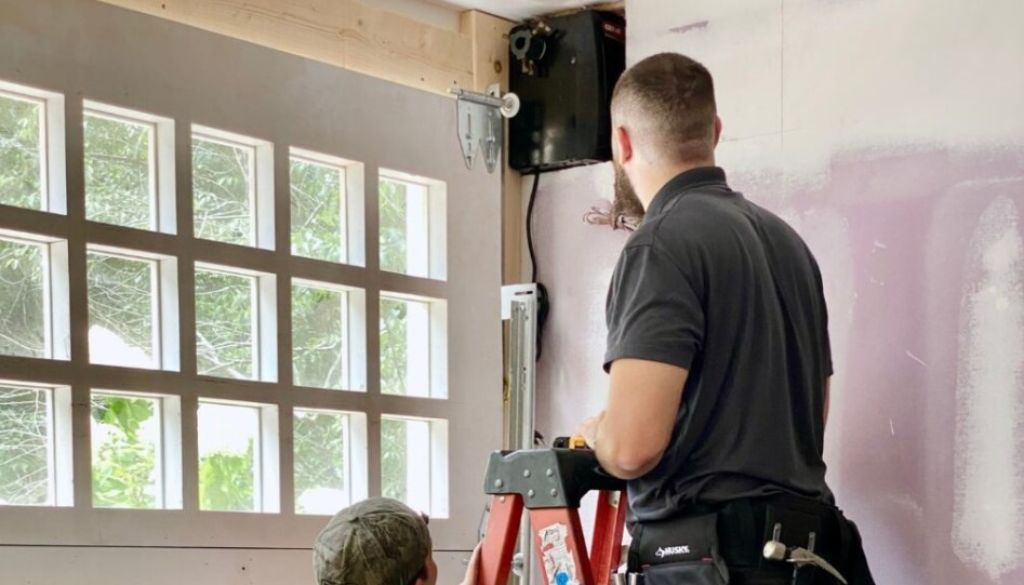
Local environment shapes maintenance reality. On the Gold Coast, salt air, humidity, and heat can affect garage door hardware and increase maintenance needs. That matters after replacement work because new parts do not enter a neutral environment. They join a system that may already have weather related wear.
A coastal door can look acceptable at a glance while still carrying the small effects of corrosion, expansion, or accelerated hardware fatigue. After a motor or spring replacement, those small effects may become more obvious. The fresh component restores force or consistency, and suddenly the rest of the system is asked to keep up. If it cannot, alignment symptoms appear.
This is where judgement matters. Not every rough movement means there is a major structural issue. Sometimes the system simply needs sensible servicing and a proper recheck after the replacement. Gold Coast service businesses commonly offer repairs, servicing, installations, and replacement of components such as motors, remotes, and springs for exactly this reason. Doors in that climate benefit from periodic attention, and at least one local provider recommends professional servicing every 12 months to help prevent breakdowns and extend the life of the door and motor. That advice lines up with what technicians see in the field. The door that gets checked regularly tends to need fewer urgent fixes.
When a simple repair turns into a bigger alignment conversation
Not every customer expects this. They approve a part replacement and assume the matter is closed. Then the technician explains that the new component is working, but the door still needs alignment correction or broader servicing. Done badly, that sounds like upselling. Done honestly, it is simply the reality of interconnected parts.
A fair explanation usually rests on what can be shown, not what can be sold. If the door now travels unevenly, sits out of square, or behaves differently side to side, the customer can often see it for themselves. It helps to explain that the replaced part restored one function, but also made the remaining issue easier to detect. That is common after old components fail slowly. People get used to gradual decline. Once the weak link is renewed, the next weak point stands out.
This is especially true when customers ask how to fix garage door problems with a single replacement. Sometimes you can fix garage door performance with one well chosen repair. Sometimes the right answer is more measured: repair the failed part first, then assess alignment and movement before deciding what else is needed. That approach avoids both guesswork and unnecessary work.
Practical warning signs that should not be ignored
Some post repair symptoms deserve quick attention because they suggest the door is still under strain. Others may simply mean a follow up adjustment is needed. The distinction depends on what changed and how severe the behaviour is, but a few patterns are consistently worth noting.
- The door closes unevenly or leaves a visible gap at one corner. One side appears to lead or lag during travel. The opener sounds strained after a recent repair or replacement. The door movement becomes rougher after spring or motor work, not smoother. The same fault returns soon after the component replacement.
These are not diagnostic certainties on their own. They are prompts to stop assuming the job is finished. If a customer reports any of them after repair work, a proper review of alignment and overall system condition is usually the next sensible step.
The difference between movement and proper movement
One of the more misleading moments in garage door work is when a repaired door opens and closes, but only just. Customers understandably feel relief. The vehicle can get in and out again. The remote responds. The immediate crisis seems over. Yet a technician learns to be cautious with that kind of success.
Proper movement is smooth, consistent, and repeatable. It does not rely on one new component compensating for the rest of the door. If a fresh motor is dragging a poorly aligned door through its cycle, the short term result may look acceptable, but the goldcoastgaragedoorrepair.com.au long term result usually is not. If a new spring setup leaves the door imbalanced, the opener may carry a burden it was never meant to carry. The system will tell on itself soon enough through sound, wear, or renewed failure.
This is why a post replacement alignment check is not a luxury item added to a bill. It is part of responsible repair work. The point is not perfection for its own sake. The point is to make sure the door operates in a way that gives the new part a fair working life and gives the owner a reliable result.
Why experienced service calls include a wider view
The best garage door repairs rarely focus too narrowly on the broken part. They start there, because failed components need to be dealt with, but they finish by checking how the whole system is behaving now that the repair is complete. That broader view matters after spring replacement, after motor replacement, and after any opener related service that changes how the door is driven.
It also explains why some jobs need a return visit and some do not. A door in decent condition may accept a new motor or spring and settle back into smooth service with only minor checks. A door with broader wear, especially in a coastal environment, may need more attention before it can be called truly repaired. Neither outcome is surprising. The difference is whether someone takes the time to verify alignment instead of assuming movement equals health.
For owners, the practical takeaway is simple. If a component has been replaced and the door still looks, sounds, or feels off, trust that instinct. If the garage door is not closing properly after repair, the answer may not be another remote or another opener setting. It may be garage door alignment. And if springs are part of the discussion, leave that work to trained professionals. The danger is real, and the balance issues that follow poor spring work are exactly the kind that turn a straightforward repair into a larger problem.
A well repaired garage door should do more than move. It should move straight, settle evenly, and stop asking its newest part to carry the whole system. That is what alignment checks are for, and after component replacement, they are often the difference between a repair that lasts and one that comes back.